01Pressure, Pipe and Perforation
Shale holds enormous quantities of oil and gas, but the rock is so dense and impermeable that hydrocarbons cannot flow through it on their own. Hydraulic fracturing — fracking — solves that problem by force: pumping fluid into the rock under extreme pressure until the formation cracks, then propping those cracks open so oil and gas can escape.1
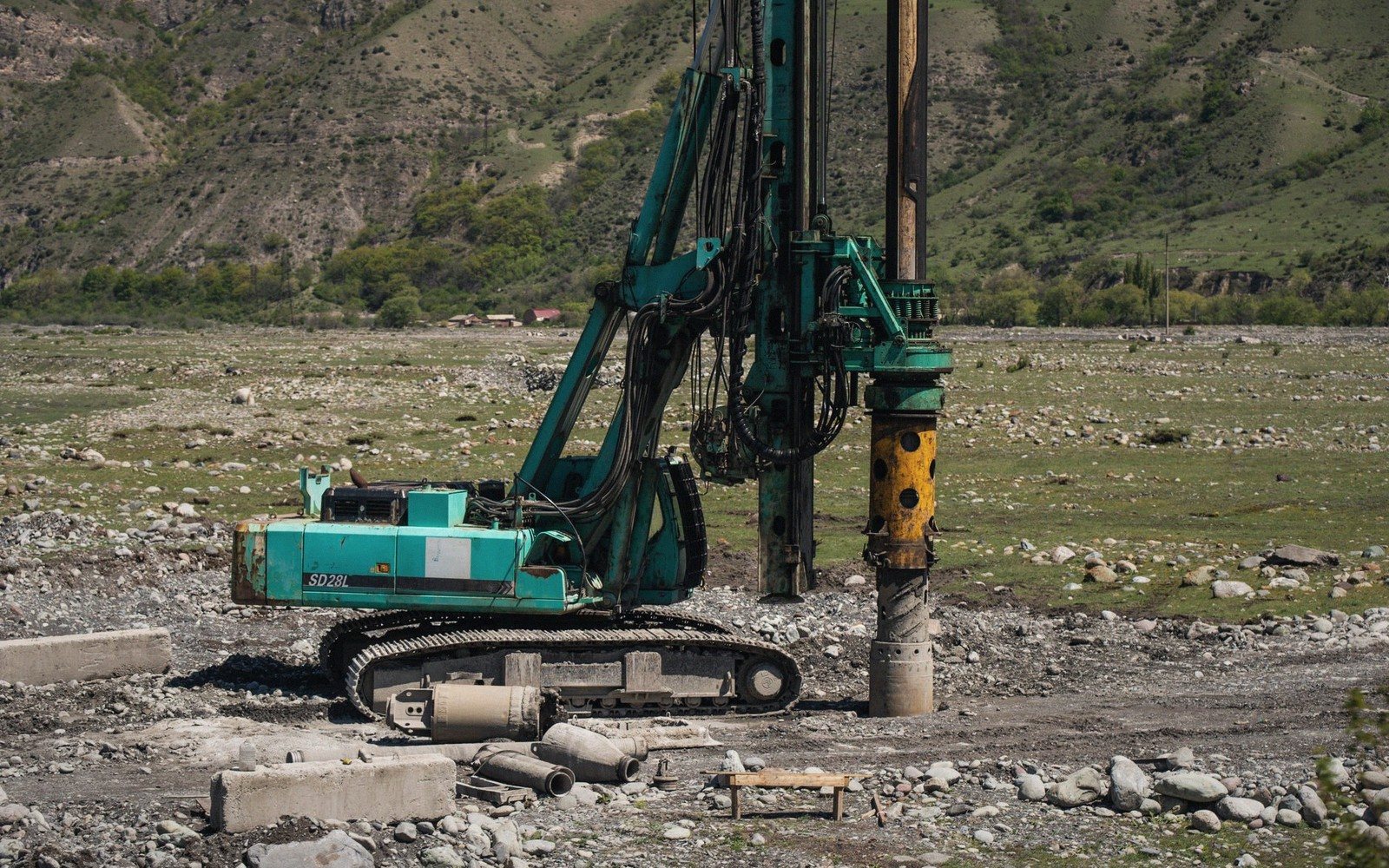
The process starts well before the first pump turns on. Drillers first bore a vertical well down through thousands of feet of rock until they reach the target shale formation — typically a mile or more below the surface. At that depth, the drill bit turns horizontal, following the shale layer laterally for a mile or more. This horizontal leg is the productive section, because it maximises contact with the hydrocarbon-bearing rock. A steel casing is then cemented into the wellbore along its entire length, isolating the well from the surrounding geology.
Once the well is lined and sealed, a perforation gun is lowered to a specific section of the horizontal casing. Small explosive charges fire outward, punching a series of holes through the steel and cement and into the shale itself. These perforations are the entry points for the frac fluid.3
02Fluid, Fractures and Flowback
The frac fluid is mostly water — typically more than ninety percent by volume — mixed with sand and a small fraction of chemical additives. Each additive has a specific job: some reduce friction so the fluid can be pumped faster; others prevent bacterial growth or protect the metal casing from corrosion. The sand, called proppant, is the critical ingredient.2
Pumps at the surface drive this mixture into the perforated zone under enormous pressure — often thousands of pounds per square inch. That pressure exceeds the strength of the surrounding rock, forcing the shale to crack along its natural fracture planes and creating new ones. The fractures extend outward from the wellbore into the formation, sometimes hundreds of feet in each direction.
Once the pumps ease off, the fractures would naturally close under the immense weight of the overlying rock. This is where the proppant earns its name: the sand grains lodge inside the fractures and hold them open, creating permeable channels through which oil and gas can flow toward the wellbore.
The well is fractured in discrete segments — called stages — and the process repeats for each one. A single horizontal well may be fractured in a dozen or more stages, working progressively from the far end of the horizontal section back toward the surface. Each stage targets a fresh section of rock. The multi-stage design is what makes horizontal drilling and fracking so productive compared with older vertical wells.
When fracturing is complete, operators allow the well to flow back. Much of the injected water returns to the surface, along with the first hydrocarbons. This flowback water is collected, treated and often recycled into future frac jobs. The well is then connected to surface production equipment, and oil and gas begin flowing in earnest.
What makes fracking remarkable is the precision applied at extreme scale. Operators model the subsurface geology in detail, adjust fluid recipes for local conditions and monitor real-time pressure data throughout each stage. The result — a permanent network of sand-propped fractures extending deep into dense rock — transforms a formation that would otherwise produce almost nothing into a commercial well.
The fractures extend outward from the wellbore into the formation, sometimes hundreds of feet in each direction.