01Tight Rock, Loose Assumptions
For most of the twentieth century, the architecture of global oil and gas was settled. Hydrocarbons lived in porous, permeable reservoir rock — sandstone, limestone — where pressure pushed them naturally toward a wellbore. You drilled down, perforated the casing, and the reservoir did the rest. The geology did the work. What sat in between those reservoirs — the dense, fine-grained shale and mudstone that geologists called "source rock" — was understood to be the origin of oil and gas, the kitchen where organic material cooked under heat and pressure over millions of years. It was not, however, considered a destination. Hydrocarbons generated in shale migrated upward and sideways into permeable rock. The shale itself, it was assumed, was spent, tight, and useless as a producer.1
That assumption collapsed in the first decade of this century, and the collapse reshaped the global energy order more decisively than almost any event since the OPEC embargo of the 1970s.
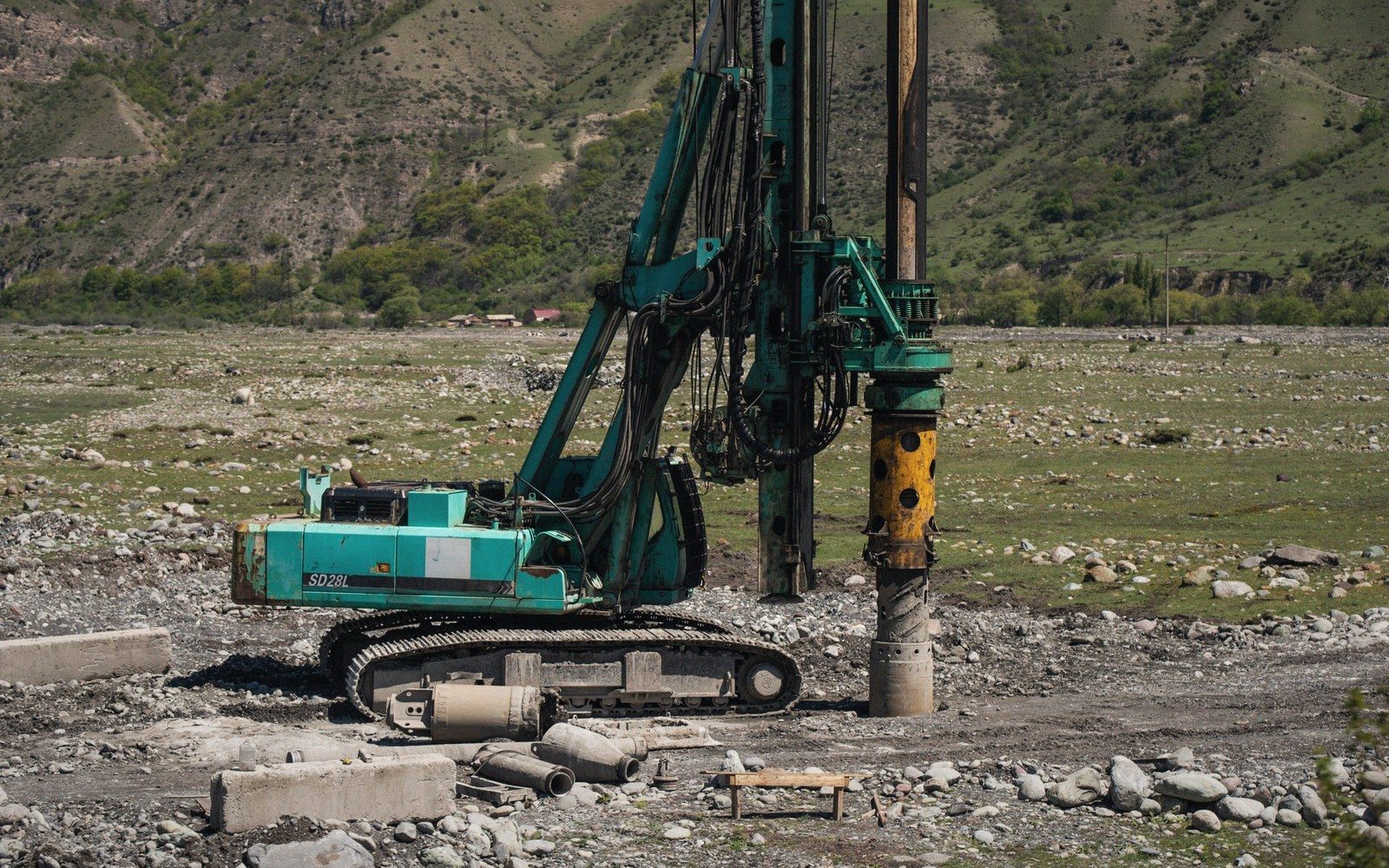
The technical breakthrough was not a single invention but the commercial marriage of two techniques that had existed separately for decades. Directional drilling — steering a wellbore off the vertical — had been practiced since the mid-twentieth century. Hydraulic fracturing, or fracking, had been used since the late 1940s to stimulate conventional wells. What changed was the ability to drill horizontally through a shale formation for a mile or more, and then fracture that long lateral section at dozens of closely spaced intervals, each crack propped open by tiny grains of sand or engineered ceramic beads so that oil or gas could flow through rock that was otherwise nearly impermeable.3
The critical measurement is permeability — the ease with which fluid moves through rock. A productive conventional reservoir might have permeability measured in millidarcies. Shale permeability is measured in nanodarcies, roughly a million times smaller. No amount of vertical drilling overcomes that barrier. But a horizontal well lying flat within a shale formation, fractured at scores of stages along its length, creates an artificial network of pathways dense enough to produce economic volumes. The rock's natural impermeability becomes less relevant once you've shattered it across a mile-long section.2
02From Barnett to the Permian: The Revolution Scales
The proof-of-concept came in the Barnett Shale beneath the Dallas–Fort Worth metropolitan area in Texas. A small independent operator named Mitchell Energy spent years and considerable money in the 1990s experimenting with how to make shale wells economic. The breakthrough that cracked the economics was a technique called slickwater fracturing — pumping high volumes of water mixed with friction-reducing chemicals at high pressure, rather than the gel-based fluids used in conventional stimulation. It was cheaper, it created a more complex fracture network, and it worked. Devon Energy acquired Mitchell Energy in the early 2000s and combined slickwater fracking with horizontal drilling at scale. Production from what had been regarded as waste rock began to climb.
The industry took notice. Operators began testing the same logic against other shale formations across North America. The Haynesville in Louisiana and East Texas became a major gas-producing play. The Marcellus Shale, an enormous formation running beneath Pennsylvania, West Virginia and New York, proved to contain natural gas resources on a scale that made it one of the largest gas fields in the world by any measure. The Eagle Ford in South Texas unlocked both oil and gas. And then there was the Permian Basin in West Texas and southeastern New Mexico — not strictly a new discovery but an old basin where horizontal drilling into stacked shale and tight carbonate formations revealed a resource base of extraordinary scale and density.
What separated shale from conventional production in operational terms was the model. A conventional field might require a handful of carefully spaced wells to drain a large, connected reservoir over decades. Shale required relentless drilling. Because each horizontal well drains only the rock immediately around its fractures, and because production declines steeply in the first year or two after a well is completed, operators had to keep drilling new wells simply to maintain output — let alone grow it. This created a treadmill: high initial production rates, rapid decline, constant capital deployment. The rig count became a closely watched real-time indicator of where shale output was heading, because the relationship between drilling activity and future production was unusually direct and unusually short.
The cost structure was also fundamentally different. A conventional offshore project might take a decade from discovery to first oil and require billions in upfront capital before a single barrel was produced. A shale well could be permitted, drilled, fracked and flowing within weeks. The short cycle time meant operators could respond to price signals with a speed the conventional industry could not match. When prices rose, rigs mobilized quickly. When prices fell, drilling stopped almost immediately, and because decline rates were steep, production followed prices down within months rather than years. This responsiveness — this elasticity — was new to the oil market, and it had profound consequences for how the market priced risk.
The Haynesville in Louisiana and East Texas became a major gas-producing play.
03A New Swing Producer
The political geography of oil had been organized for decades around the concept of the swing producer — a supplier, principally Saudi Arabia, with enough spare productive capacity to raise or lower output deliberately and thereby influence the global price. The United States, as a mature producer in long decline through the 1980s and 1990s, had no meaningful role in price formation. It was a price-taker, not a price-setter.
Shale changed that. As American production climbed through the early part of this century and then accelerated sharply — ultimately making the United States the largest crude oil producer in the world by volume — the market's supply dynamics were transformed. The old model had assumed OPEC, and particularly OPEC+, could manage the price by controlling supply with a degree of precision unavailable to fragmented market participants. Shale introduced a new supply source controlled not by a cartel or a state but by hundreds of independent operators, each responding to their own economics. The aggregate effect was market-like: when prices were high enough to clear individual breakevens, production grew; when they fell below breakeven, it contracted.
This created a structural tension at the heart of the global oil market. OPEC+ could still move the price by cutting production, but a price rise resulting from those cuts would immediately incentivize more shale drilling, which would in turn cap the price rally and erode the market share OPEC+ had sacrificed to achieve it. The American shale industry had become, in effect, a distributed swing producer — not through coordination or strategy, but through the simple mechanics of short-cycle, price-responsive capital allocation. OPEC and OPEC+ found themselves managing not just their own members' output but implicitly managing the ceiling they were willing to set for shale.
04The Economics That Evolved
The shale industry's early years were characterized by explosive growth and, for many participants, uncertain returns. The constant drilling required to offset steep decline rates consumed cash at rates that made free cash generation elusive when prices were moderate. A brutal price collapse concentrated minds. Operators who survived did so by driving down the cost of drilling and completing wells — through technological learning, operational efficiency and the ruthless focus on the most productive parts of each formation, the so-called sweet spots where geology was most favorable.
The improvements were real and substantial. Well costs fell sharply over successive cycles. Longer laterals — extending the horizontal section of a well to two miles or beyond — spread fixed costs across more productive rock. Improved fracturing designs placed more sand per foot of lateral and more precisely targeted the intervals most likely to produce. Data from thousands of wells fed machine-learning models that helped operators predict where the next well would perform best. The shale industry became, somewhat paradoxically, one of the most data-intensive manufacturing operations in the energy sector — the factory floor was a mile underground, but the discipline applied to it was industrial.
The consequence for the global market was durable. Even as the conventional wisdom periodically forecast the exhaustion of sweet spots or the limits of efficiency gains, the Permian Basin in particular continued to deliver production growth that surprised even optimistic forecasters. The basin's stacked pay zones — multiple shale and tight-rock intervals lying one above the other — meant that a single surface location could be used to drill wells into several distinct formations, compressing the footprint and cost of development.
What the shale revolution did not do was eliminate the underlying economics of commodity markets. Price cycles continued. Operators continued to face the tension between growth and returns. The treadmill kept turning. But it fundamentally altered the balance of power between producers, between the United States and OPEC+, and between the assumptions baked into a century of oil market thinking. The rock that was once the kitchen — the source of oil, not its destination — turned out to be the larder as well.
How it unfolded
- Late 1940shydraulic fracturing first used commercially on conventional wells
- 1990sMitchell Energy experiments with shale in the Barnett formation
- Early 2000sDevon Energy combines horizontal drilling with slickwater fracking at scale
- First decade of 2000sshale production begins to climb; revolution becomes visible
- Subsequent yearsEagle Ford, Marcellus, Permian horizontal drilling scales rapidly; US becomes world's largest crude producer by volume
Key players & places