01Finding It and Getting It Out
Upstream is where everything begins. It covers the search for oil and gas — seismic surveys that map subsurface rock formations, exploratory drilling that confirms whether hydrocarbons are actually there, and then the development drilling and production infrastructure that brings them to the surface at commercial scale. When a company "finds oil," it is doing upstream work.1
The upstream stage carries the highest geological risk. An explorer might spend years and hundreds of millions of dollars drilling wells that come up dry. When a well does succeed, the operator must then decide how to develop the reservoir: how many wells to drill, what kind of artificial lift to use as reservoir pressure declines, and how long the field can sustain economic production. Offshore fields add layers of engineering complexity — subsea wellheads, floating production platforms, and the challenge of operating in extreme conditions.
The raw output of an upstream operation is crude oil, natural gas, or both together. Neither arrives in a form that most customers can use directly. That gap is where the next two stages come in.
02Moving It
Midstream is the connective tissue of the energy system — the pipelines, tanker loading terminals, processing plants, storage tanks and liquefaction facilities that sit between the wellhead and the refinery or end-user. It is often the least visible part of the chain, but among the most capital-intensive.2
Gas lifted from a well typically contains a mix of methane, heavier hydrocarbon liquids, water and impurities. Before it enters a pipeline it must be processed: liquids stripped out, water removed, and the gas conditioned to meet pipeline specifications. Those stripped liquids — ethane, propane, butane, natural gasoline — become natural gas liquids, or NGLs, which are valuable feedstocks in their own right.
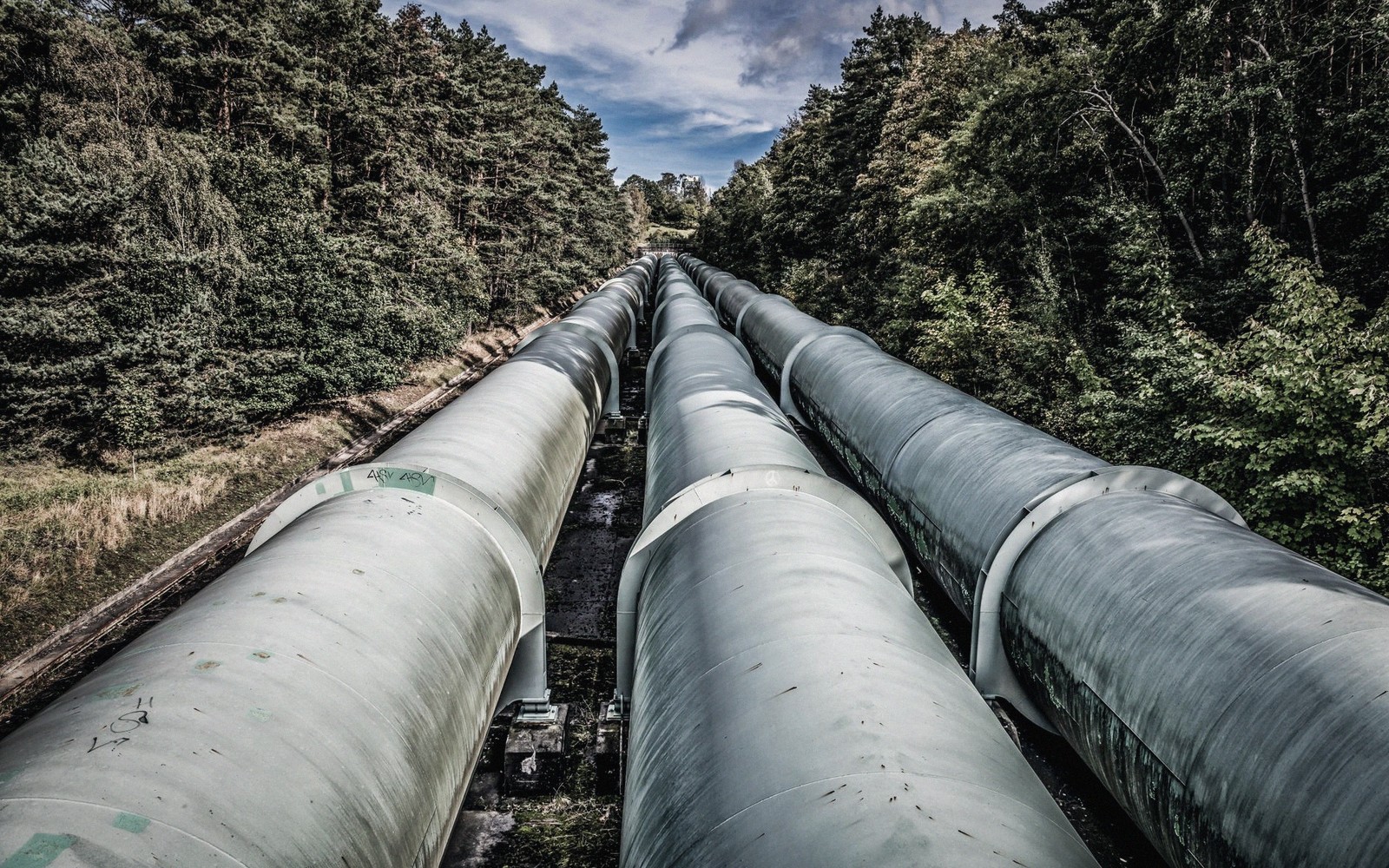
Crude oil moves by pipeline where geography allows, and by tanker where it must cross open water. The economics of midstream are fundamentally different from upstream: a pipeline operator typically earns a fee for throughput rather than bearing commodity-price risk directly. This makes midstream cash flows relatively predictable, which is why midstream assets often trade at different valuations than exploration-and-production companies.
Storage is the midstream stage's buffer mechanism. Tank farms near ports and pipeline junctions allow the system to absorb mismatches between the pace of production and the pace of refinery demand — a function that becomes visible to markets whenever crude inventories are reported.
Crude oil moves by pipeline where geography allows, and by tanker where it must cross open water.
03Refining and Selling It
Downstream begins when crude oil arrives at the refinery gate. There, through distillation, cracking and blending, the barrel is separated into the finished products the world actually consumes: gasoline, diesel, jet fuel, fuel oil, petrochemical feedstocks and dozens of others. Refining is a high-throughput, thin-margin business that rewards scale and operational efficiency above almost everything else.3
Beyond the refinery, downstream extends through the distribution network — product pipelines, blending terminals, fuel trucks and petrol stations — to the moment a driver fills a tank or a factory receives a feedstock delivery. Retail fuel, the endpoint most people see, is the final thin slice of a chain that began in a rock formation thousands of metres underground.
Downstream companies also produce petrochemicals — plastics, fertilisers and synthetic materials — from refinery outputs. This segment has grown in strategic importance as many producers look to diversify their slate of products.
04Why the Divisions Matter
The three stages are operationally distinct, but they are financially linked. A crude price spike helps upstream producers and squeezes downstream refiners (unless they can pass costs on quickly); a glut hurts producers but typically widens refining margins. Understanding which part of the chain a company operates in — or whether it operates across all three as an integrated major — is the first step in reading its exposure to any given market move.