01Finding, Moving, Refining, Selling
The word "major" gets used loosely, but it has a precise meaning in the oil industry. It refers to a small group of very large, investor-owned companies — firms like Shell, BP, ExxonMobil, Chevron and TotalEnergies — that operate across every stage of the hydrocarbon value chain simultaneously. They are often called "integrated" because integration is literally the point: they don't just pull oil from the ground, and they don't just sell fuel at the pump. They do both, and everything in between.1
Upstream is where it starts. The majors hold exploration licences across dozens of countries, running seismic surveys to map rock formations, drilling appraisal wells to test what's there, and — if the economics work — developing fields that may produce for decades. This is the highest-risk part of the business: exploration wells frequently come up dry, and development projects can run to tens of billions of dollars before a drop of oil is sold. The majors absorb that risk partly through sheer scale, spreading bets across many basins and geographies, and partly through the financial firepower that comes with their size.2
Once crude is flowing, it has to move. The majors own or hold stakes in pipelines, tankers, storage terminals and export facilities — the physical infrastructure that keeps molecules in motion from wellhead to refinery gate. Some of this infrastructure is wholly owned; much of it is shared through joint ventures, which is one reason the industry's ownership structure can look dauntingly complex from the outside.
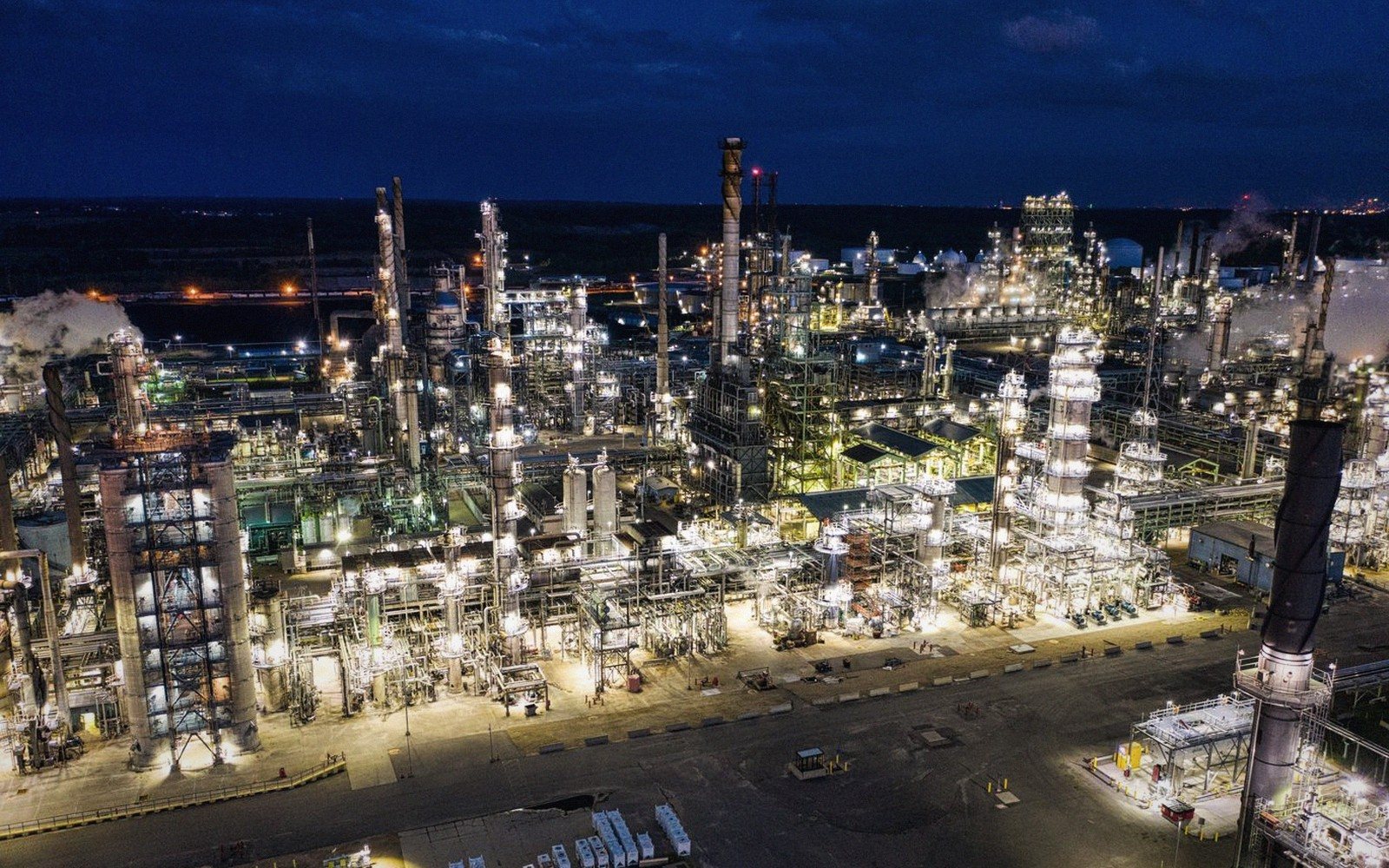
Refining is where crude becomes usable product. A major's refinery network turns raw oil into petrol, diesel, jet fuel, lubricants, petrochemical feedstocks and dozens of other outputs. Refining margins — the profit spread between crude input and refined-product output — move independently of the crude price, which means a good refining year can partially cushion a bad upstream one. That natural internal hedge is one of the clearest arguments for staying integrated.
Downstream, the majors sell through retail networks, supply industrial customers and trade refined products in wholesale markets. Some run substantial trading operations that act almost as businesses in their own right, taking positions on physical cargoes, futures contracts and freight rates. The trading desk, invisible to most consumers, is often one of the more profitable units in a good market.3
02Where the Capital Goes
Running the whole chain is expensive. A major's annual capital expenditure can rival the GDP of a small country, and deciding where to allocate it is — arguably — the most consequential thing a major's leadership actually does. Every dollar committed to a new deepwater development is a dollar not spent on refinery upgrades, retail expansion, renewables or share buybacks.
The capital allocation decision is not purely technical. It reflects assumptions about where the oil price will be in ten or twenty years, what competing projects look like, what governments will permit, what shareholders will reward, and how the energy landscape is shifting. Majors model these scenarios obsessively. They have to: a deepwater platform sanctioned today may not reach peak production for a decade, and will be expected to run for several decades after that.
In practice, this means the majors are always managing a portfolio — existing producing assets generating cash, development projects consuming it, and a longer tail of options on future resources. The balance between those three buckets shifts as prices rise and fall, as geopolitics opens or closes access to particular basins, and as the economics of different energy sources change relative to one another. The integrated model exists precisely because spreading capital across the chain reduces the volatility any single part of it can inflict on the whole.
What this adds up to is something more like a capital-allocation machine with an energy business attached than a simple "oil company." The majors find hydrocarbons, move them, transform them and sell them — but the underlying skill is deciding, continuously and at enormous scale, which of those activities to do more of, which to do less of, and what comes next. That decision, repeated across hundreds of projects and multiple decades, is what the majors actually do.
The trading desk, invisible to most consumers, is often one of the more profitable units in a good market.